MMI School Garden Blog – Term 3 Recap
This term in the Mt Maunganui Intermediate School Gardens has been one of experiments, learning, and plenty of teamwork. A real highlight of the term has been our seed experiment. We wanted to know whether our iceberg lettuces would grow better in 6 cell plastic pots or in rolls of wool packaging.
The results were clear – the wool “seed snails” took off much faster. The wool helps to retain moisture, while keeping the roots warm during the cooler months, as well as giving them more space to grow, so that the roots are already well established before we plant them out. It has been exciting for the students to see how something as simple as recycled wool can give seeds such a strong start. Iceberg lettuces, started in wool seed snails, and destined for the school equity lunches, are now thriving in our new cold frame, kindly built by our caretaker - thanks Brendon! His skills and support make a huge difference in keeping the gardens moving forward, and we’re very grateful.
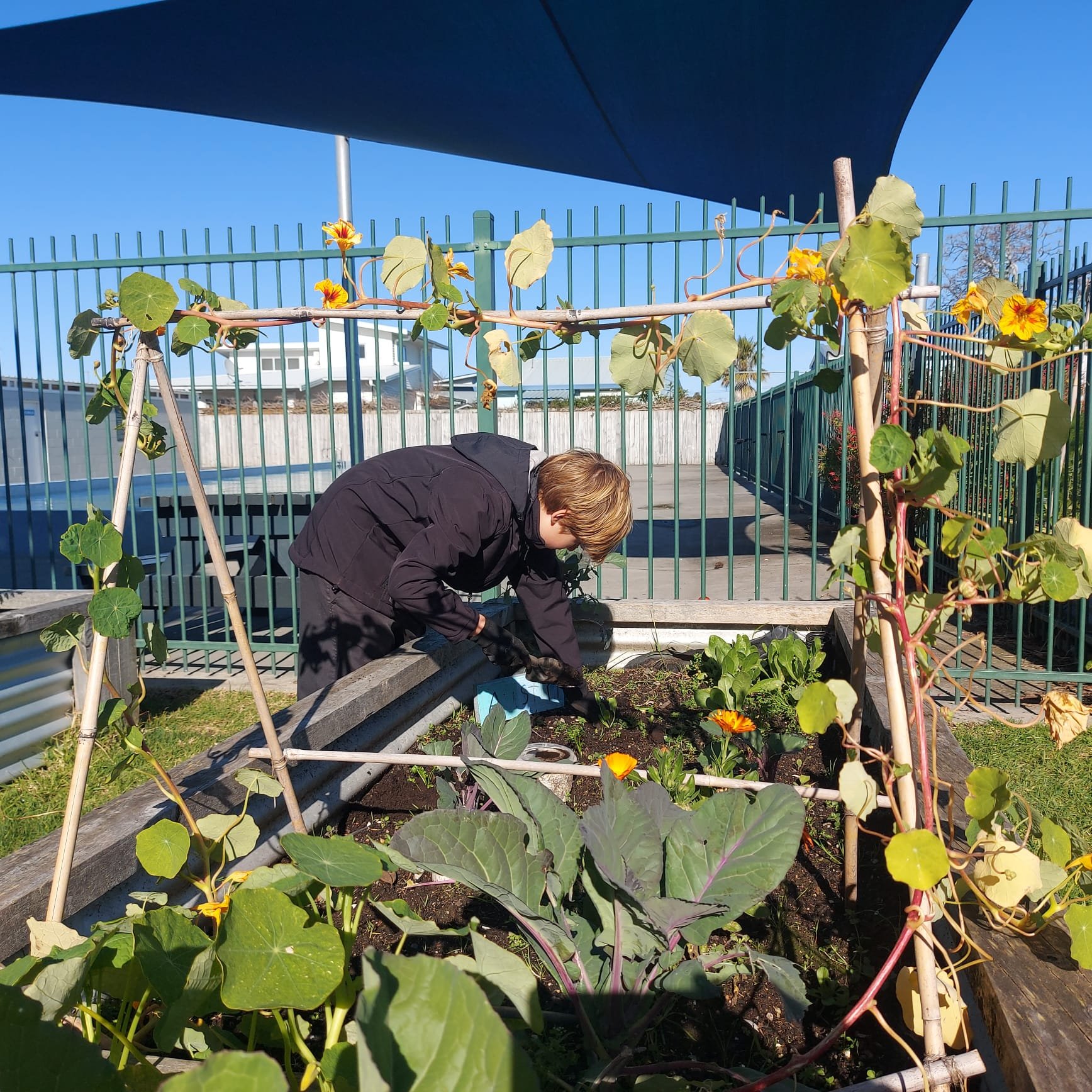
Ms. Barr is really enjoying being able to harvest greens directly from the garden, to add to the sandwiches. Students have been learning first-hand too, the value of compost. They’ve been digging, turning, and aerating the piles regularly, and this effort has produced rich, dark compost we call “black gold.” We’ve dug this compost back into the garden beds, giving our soil the nutrients it needs to stay healthy and productive. It’s a great reminder of how nothing in the garden goes to waste – with a little patience and effort, scraps turn back into food for the earth.
When the garden gives us lemons…
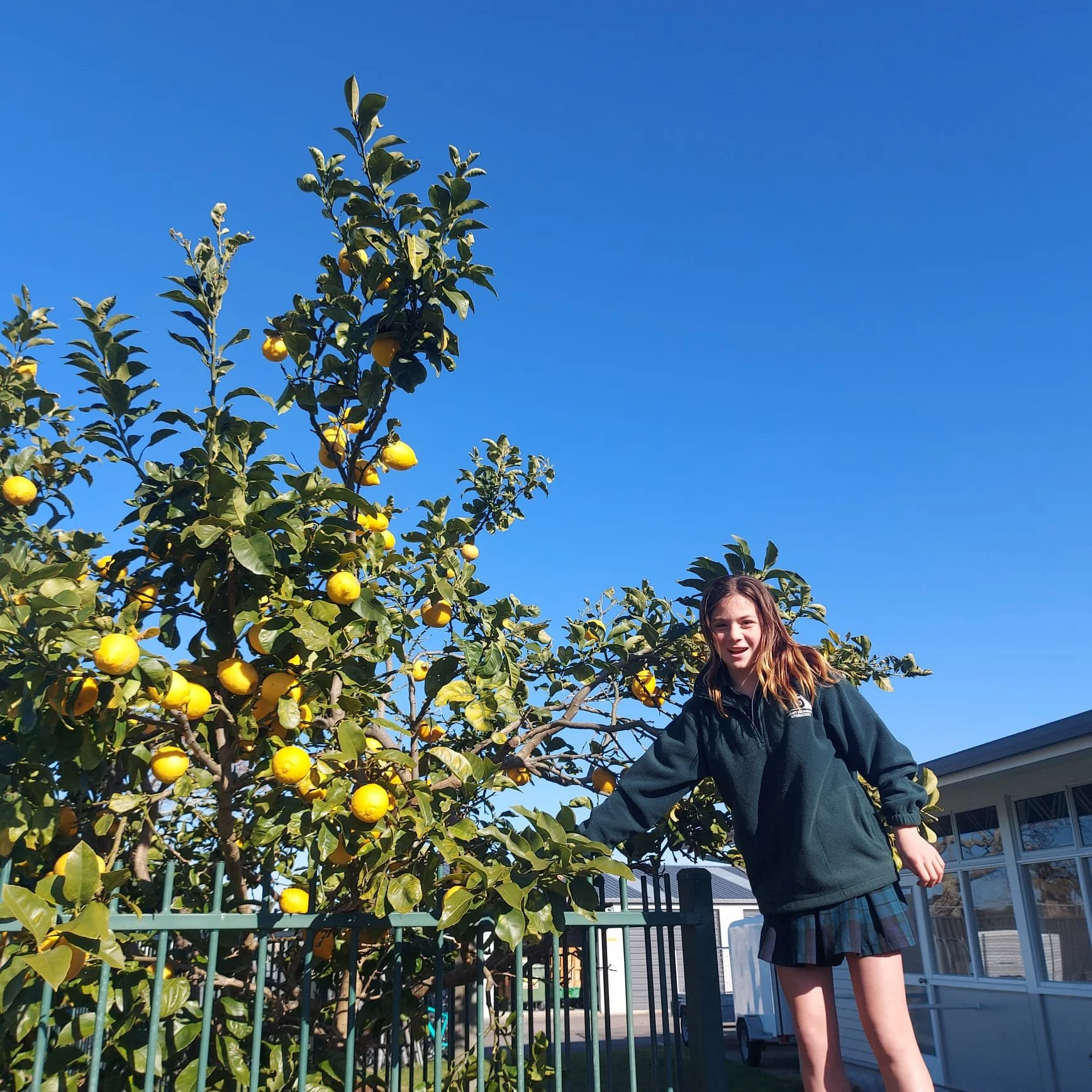
This term also gave us the chance to enjoy the fruits of our very own lemon tree. We harvested lemons, massaged them, squeezed them, and used a soda stream to fizz them up into fresh lemonade. It was a hit - a perfect shot of vitamin C to ward off the winter bugs! It seems we have inspired some of our gardeners, who have been gathering lemons to make lemonade at home for their families too!
Brewing Seaweed Tonic
This term, we used seaweed collected from the beach after a storm, to brew a plant tonic in a large wheelie bin. We’ve hung the seaweed in a makeshift “teabag” (an old wastepaper bin) so it can steep slowly, releasing nutrients into the water. Students have enjoyed checking on the whiffy brew, and our plants are already benefiting from the natural boost. Our banana ‘tea’ is also a great way of adding potassium to the soil.
Growing, Planting and harvesting
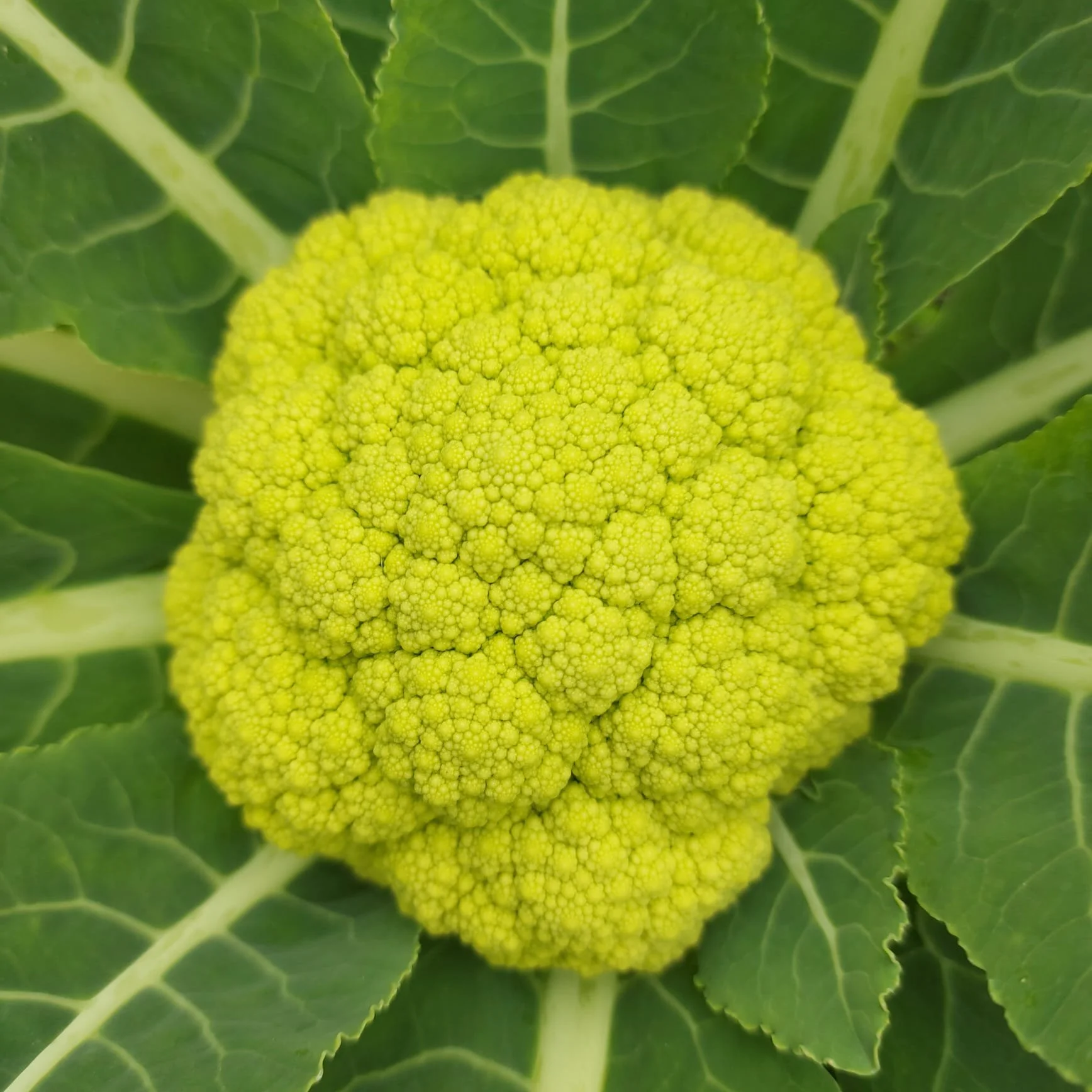
Our broccoli and cauliflower plants grew really well, but unfortunately some disappeared before we could harvest them. It was disappointing, but also a chance to talk about the challenges of growing food in a shared space. However, our gardeners rarely go home empty handed, with herbs and spinach being regular favourites and some lucky gardeners harvesting fennel bulbs and carrots too! Meanwhile, seedlings from our shade house have been planted out across the beds, and students are helping to manage pests by regularly topping up the slug traps. Our leeks and elephant garlic are growing well, and should be ready to harvest in the coming term.
On our last day of term we harvested some of our rhubarb, stewed it up on a camping stove in the garden and added some custard, for a yummy treat. Strawberries and Spuds Last year we discovered that wool mulch works wonders for strawberries, so this term we’ve been laying down wool again over our raised strawberry rows. We’re hoping this will give us another bumper crop later in the season. Our seed potatoes have been sprouting (“chitting”) in wool-lined boxes in the shed. We hope to have them in the ground before the holidays as well as planting some in recycled coffee sacks to see which method gives us the best harvest. It’s also a nice way for our gardeners to learn to think outside the (planter) box, when it comes to planting home grown veg! - we even discussed rounding up those stray sprouting spuds from the bottom of the pantry to plant in buckets, for new potatoes on Christmas Day!
Kumara, Herbs and Signs
We’ve also prepared kumara for growing tipu (shoots), which we hope to plant at the start of next term. Our herb garden has had a big clear-out and is now being replanted with new herbs. Students are making signage so we can identify the plants and learn their names as they grow. Fresh new signs have also gone up around the gardens, making the space more inviting and helping visitors understand what’s being grown.