Golden Sands School’s Blog
Growing Together – Term 3 in Our School Garden
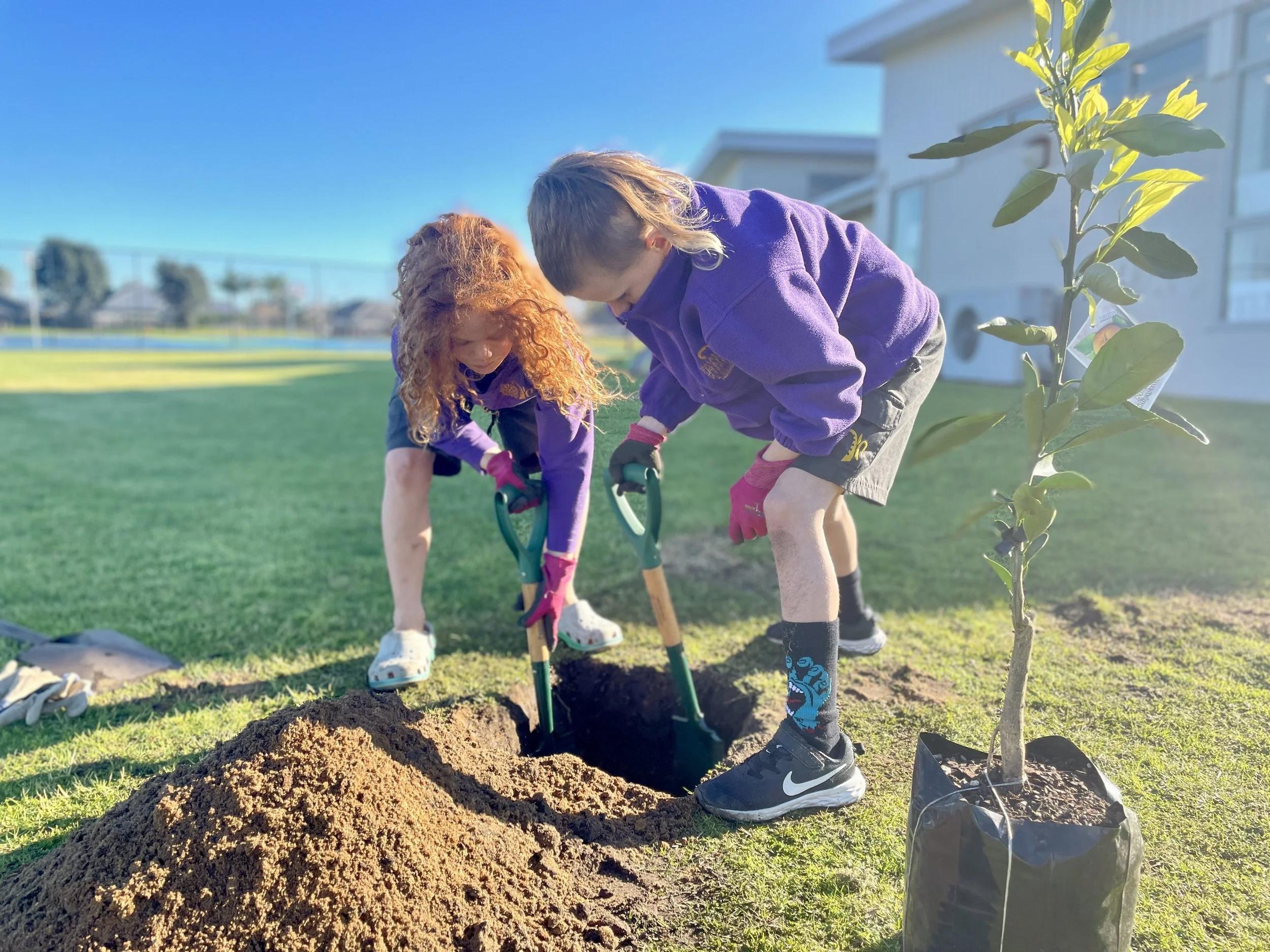
Term three has been another exciting season in our school garden, filled with planting, learning, and celebrating milestones. With the help of our tamariki, we’ve added two mandarin trees kindly sponsored by Tauranga City Council, an orange tree gifted by PIPS to mark the one-year birthday of our school garden and a peach tree donated by Te Puna Plum nursery. That brings us to a total of seven fruit trees in just one year!
Our young gardeners showed great teamwork as they dug the holes, planted the trees, and watered them carefully. These trees will take time to grow, but by the time our students reach Year 6, they’ll be able to harvest the very first fruit from the orchard they helped establish. It’s been wonderful to see how much interest and care the children put into this project.
We’ve also explored how much fun it is to cook with our garden produce.
The tamariki harvested fresh kale, cut it into pieces, tossed it with a little olive oil and a sprinkle of salt, and turned it into crispy kale chips. Simple, healthy, and so yummy! It was an experience they’ll never forget. Even years later, I still often hear: “Nina, do you remember when we cooked…?” Moments like these stay with them.
We also steamed our very own rainbow carrots and broccoli, and you could see from the children’s faces just how much they enjoyed eating fresh, healthy kai they had grown themselves. And with Shepard’s help, we had lots of fun making popcorn. The tamariki loved watching the kernels pop under the glass lid—and of course, the big question came straight away: “Can we do more?”Next term, we’ll be planting lots of popping corn in our garden!
This term we also began preparing for our root vegetable season. We started sprouting kūmara in a bath of water, growing our own tipu (shoots) that will be planted in November. We’re hopeful for another bumper crop, just like the one we enjoyed this year! At the same time, our seed potatoes were sitting on a sunny windowsill, getting ready to go into the ground. Just before the holidays, we held a big planting day where the children dug trenches and carefully placed the potatoes in rows.
We’ve also set up our very own Sentinel Garden! We became little garden detectives, looking closely for different kinds of pest bugs and checking our plants to see what we could spot. It was a fun way to learn how we can help keep our garden—and our environment—safe and healthy.
Each week the tamariki were able to take food home. It’s really important for them to share something with their whānau and show what they’ve discovered in the school garden—and there was plenty to go around!
As we head into early summer, the garden is bursting with life—our bumblebee garden is full of flowers, the fruit trees are blossoming, and we’re getting ready to plant our summer vegetables. With Christmas just around the corner, there’s so much to look forward to in the garden and beyond!
Term Two in the Garden – Kumara, Birthdays & Butterflies!
Term Two has been full of excitement, learning, and hands-on discoveries in our school garden!
One of the biggest highlights was harvesting our very first kumara crop — all grown from just one kumara we sprouted last year. We removed the greenery and talked about how we needed to be careful when digging up our treasures so we didn’t damage the kumara’s skin. The kids had an absolute blast digging in the dirt and discovering the kumara hiding underneath. And what a haul it was! The harvest was used to make a tasty Matariki soup, which the class helped prepare as part of their Matariki celebrations.
It’s not just butterflies we want to attract — this coming term, we’re also focusing on bumblebees! The NZ Bumblebee Trust has kindly given us a bunch of books to learn more about bumblebees, along with packets of wildflower seeds to help encourage their arrival. Not only are bumblebees super cute — they’re also fantastic pollinators for our fruit trees! We’ve prepared a large garden bed ready for the bumblebee seed mix to be scattered. With a bit of luck, we should start spotting the first results in early spring!
Another fun activity this term was creating something special for the mums for Mother’s Day! Since the garden had plenty of flowers to offer, we headed outside and gathered a variety of blooms. Back in the classroom, the tamariki drew vases on square pieces of cardboard. Then they poked little holes in the cardboard and carefully placed the flower stems through them. I was amazed at how beautifully the project turned out — the tamariki were so creative, and the final results looked absolutely adorable!
Even though it’s winter, the garden is still going strong. We were surprised to find loads of healthy veggies still growing in June — kale, beans, kohlrabi, and even a few bright yellow courgettes!
Another creative end-of-term activity was making lanterns for a Matariki celebration. The Shepherd community, who help care for the garden, led the way in designing garden-themed lanterns. Using recycled plastic bottles, the tamariki helped paint and decorate them to look like colourful mushrooms. They looked absolutely cute all lit up and made a beautiful addition to the Matariki decorations!
Next term, we’ll start planning for spring — planting new crops, thinking about composting, and making sure our garden stays full of colour and life. There’s lots to look forward to, and we can’t wait to get our hands back in the soil!
Term 1 Garden Adventures: From Hotcakes to Caterpillars!
After a hotcake-dry summer that left our garden grilled and gasping for water, we were amazed to find some resilient treasures still growing beneath the soil. Out came rainbow carrots and some of the funniest-shaped potatoes we’ve ever seen! Our courgette plants also surprised us with a bumper crop of bright yellow courgettes. Many of our younger tamariki weren’t quite sure what they were. “Is it a banana?” one asked.
One of the most exciting discoveries this term was spotting monarch caterpillars and butterflies for the first time in our garden. We had planted swan plants in the hope of attracting them, and it worked. The butterfly laid eggs, and soon tiny caterpillars began munching away. The tamariki were absolutely thrilled to watch the full life cycle unfold.
We also focused on seed saving this term—carefully collecting seeds from beans, carrots, dill, broccoli, and parsley. The kids loved filling the seeds into little containers, asking curious questions and wondering if this would be a never-ending cycle of planting and growing.
As we head into the cooler months, we’ve started planting our winter seeds. The tamariki were fascinated by the variety of seed sizes—and amazed that something as small as a broccoli seed can grow into such a big vegetable.
And of course, during those extra hot summer days, nothing beats turning on a spinning sprinkler flower! The tamariki had a blast running through it, laughing and cooling off—while the garden got a much-needed watering too.
We’re looking forward to term 2, with more planting, harvesting, and exploring what our garden has to teach us. The cooler season brings new adventures.
Hidden Garden Treasures
What a year it has been at Golden Sands School! I can’t believe I’ve only been working there since this year when we started re-establishing the school garden back in May. It feels like the garden has been there much longer. We’ve already got thirteen garden beds, a shed and we planted the first fruit trees, everything looks so well-established.
Term 4 flew by so quickly as the garden kept us busy, as always. We found garden treasures nearly every week, and I loved watching the tamariki marvel at how things have grown as we rotated four classes through the garden each week.
Of course, the most loved treasures are edibles, but there are also treasures like beautiful flowers, buzzing bees, and worms hiding in the soil. From what was once just a grass patch, we’ve created a place to learn about biodiversity.
We harvested some extraordinary rainbow carrots, including one that measured over 30 cm! It took us a while to wiggle it out, just like a loose tooth. The tamariki were proud to take home a carrot each, alongside heaps of colorful radishes. We also discovered some juicy strawberries, cabbages, and a vegetable unfamiliar to the kids “kohlrabi”.
We cut the kohlrabi into slices and tried something new. It turns out you can eat kohlrabi raw, and it has a sweet taste, similar to broccoli.
The garden has been very dry, so watering kept us busy every week. The kids always prefer using watering cans — they seem to enjoy the idea of caring for the plants and keeping them happy.
We also learned that not everything in the garden is edible, and it’s important to be careful about what we pick. For example, while our potato plants were thriving, their flowers and berries are actually poisonous.
That didn’t stop us from preparing for our Christmas potato harvest! It was a thrilling garden gold treasure hunt and a fantastic experience for our new Year One learners to uncover so many potatoes hiding in the soil. And what a bumper harvest it was! We even found red potatoes, which was an extra surprise. Together, we filled about 25 paper bags to take home and share with families.
We’ve also planted summer crops like pumpkins, corn, tomatoes, zucchini, and kumara tipu, which we raised ourselves by letting a kumara sprout in water. We will let nature take its course over the long holidays, and fingers crossed, we’ll discover more treasures when we return to school!
As the year comes to a close, I feel incredibly proud of what we’ve achieved together in such a short time. The garden has become a vibrant, living classroom where tamariki learn, grow, and connect with nature. It’s been a joy to see their curiosity and excitement. I’m looking forward to another year of growth, learning, and plenty of garden treasures in 2025!
Term 3 – Our First Rewarding Harvest
Where did Term 3 go? So much happened, and the time flew by!
We began with kumara and potatoes, always a favourite because digging them up feels like a treasure hunt. We watched a video about potatoes and placed them in egg cartons on the windowsill. By the end of the term, they'd sprouted little "pimples" (shoots), ready to be planted. During the last week, the boys enjoyed digging a trench to plant them. Now, they’ll grow over the holidays, and I can't wait to see the tamariki's reactions when the plants sprout next term. The kumara, sitting in water alongside the potatoes, also grew long shoots, which will be ready for planting in November.
On wet days, we took the opportunity to start planting summer crop seeds in punnets. The tamariki explored the variety of seed sizes and colors, discovering how even the tiniest seed can grow into a large vegetable. We planted beans, pumpkins, watermelon, tomatoes, zucchini, corn, cucumbers, and sunflowers. By Term 4, these seedlings should be ready for transplanting into the garden beds.
Another big project was mulching around the garden boxes to stop grass from creeping in and to create better paths. We laid cardboard first, then added mulch. I was amazed at how well the younger kids handled the wheelbarrows, and they loved climbing the mulch pile! The transformation was fantastic.
The tamariki were rewarded with bright red radishes. Each child got to pull one out, and while some found them spicy, others couldn’t stop eating them. It was great to see them trying something new.
Our garden is growing, both with food and new additions. Over the last month, we added an apple and a plum tree to join our lemon tree. The tamariki were excited to plant them, though surprised to see bare "sticks." I explained that the trees are dormant now but will bloom in summer. Jake and Warren, who have been a huge help, assisted us with the planting.
We also received a new garden shed, generously funded by the Papamoa Rotary Club. The tamariki helped me to move all the tools into it. The shed, now located right by the garden, will make our work much easier. Thank you, Papamoa Rotary Club!
To attract bees and butterflies, we learned they need plenty of flowers. Warren built a colourful border around the old long jump area, which we are transforming into a flower garden. The tamariki helped weed the area, and we planted sunflowers and scattered flower seeds.
On our last gardening day of Term 3, we harvested lots of vegetables for the tamariki to take home—cabbages, cauliflower, broccoli, radishes, and silverbeet. It was so rewarding to see how amazed they were at the growth since we started.
Happy holidays, tamariki! I’m looking forward to another fun term with you.
Celebrating Community and Nature: Our School Garden Project
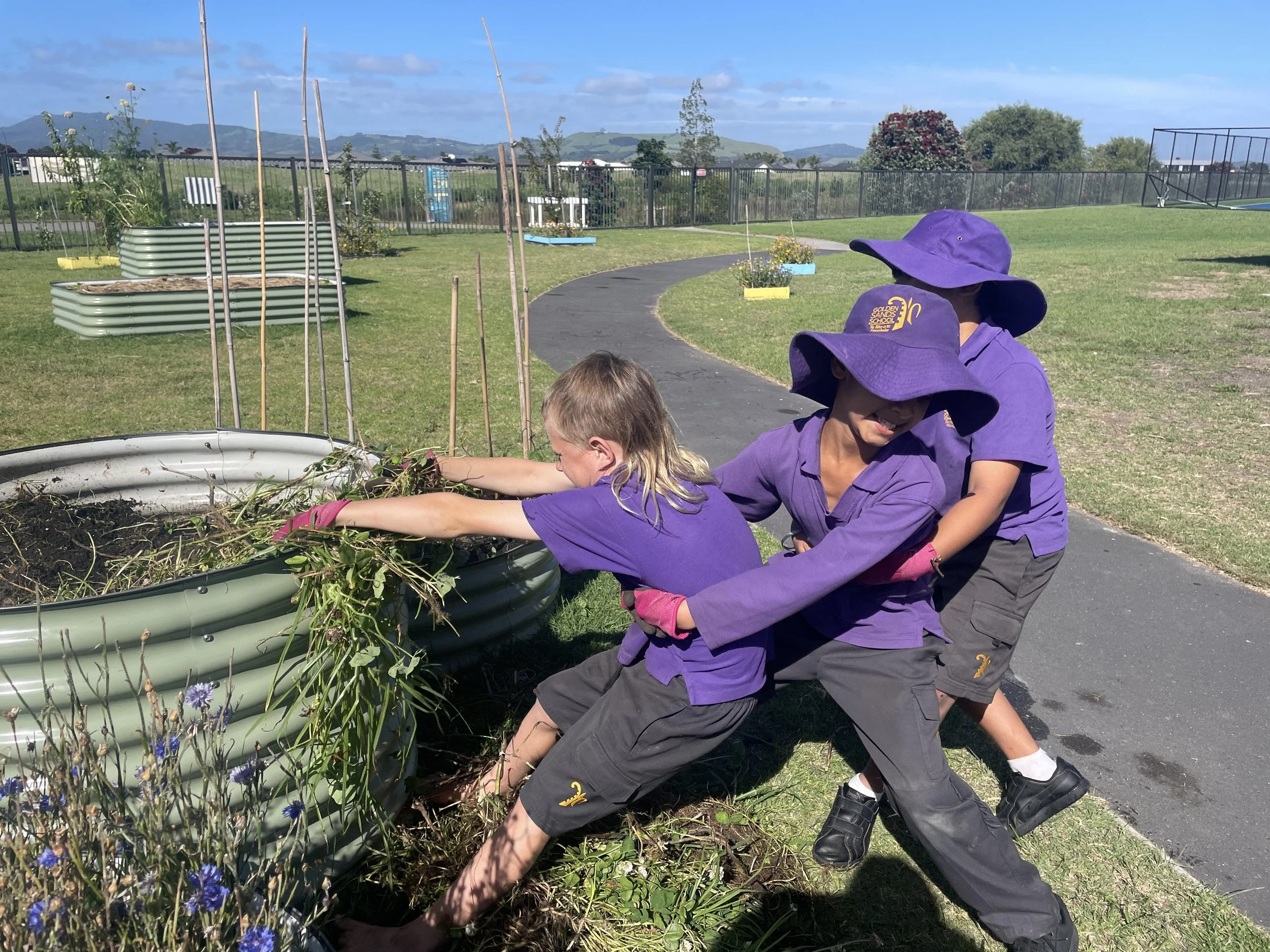
In Term 2, the garden plan came alive! The school community came together for a fantastic event that combined teamwork, learning, and a lot of fun. The goal was to build and fill twelve new garden boxes. On a Tuesday morning, there was an amazing turnout of support from parents, grandparents, and friends. We gathered on the school grounds, along with the excited students and teachers, for a quick briefing. Armed with tools, wheelbarrows, and lots of enthusiasm, we set out to build twelve tin garden boxes and plant eleven feijoa plants. By midday, all the garden boxes were built, layered with cardboard, and filled with clippings and soil.
The community working bee day was a great success. It was heartwarming to see so many people come together to support our school garden project. The sense of community and team effort made this day unforgettable.
Once the boxes were ready, it was time for the most exciting part—planting the seedlings! These were not just any seedlings, they were ones we had nurtured from seeds in our classrooms. Watching our tiny seeds grow into healthy seedlings had been a rewarding experience, and now, planting them in our new garden boxes felt like a significant milestone. We planted a variety of vegetables and flowers, each student carefully placing their seedlings into the soil.
As part of the school’s Matariki celebrations, we prepared vegetables to cook some delicious soup. The kids took charge of peeling and chopping the vegetables, which included carrots, potatoes, pumpkins, onions, and garlic. It was wonderful to see that the little ones could handle a peeler so well and weren’t shy about peeling onions and garlic. The food scraps went into the worm farm, and we kept the pumpkin seeds for future planting. Nothing goes to waste.
Another highlight of the day was planting a lemon tree for Matariki. Planting a tree symbolises growth and new beginnings. In a few years, when we are picking the lemons, which are a winter fruit, it will serve as a permanent reminder of our first school garden Matariki celebration. The tree found a special spot in a raised garden box, built by Warren.
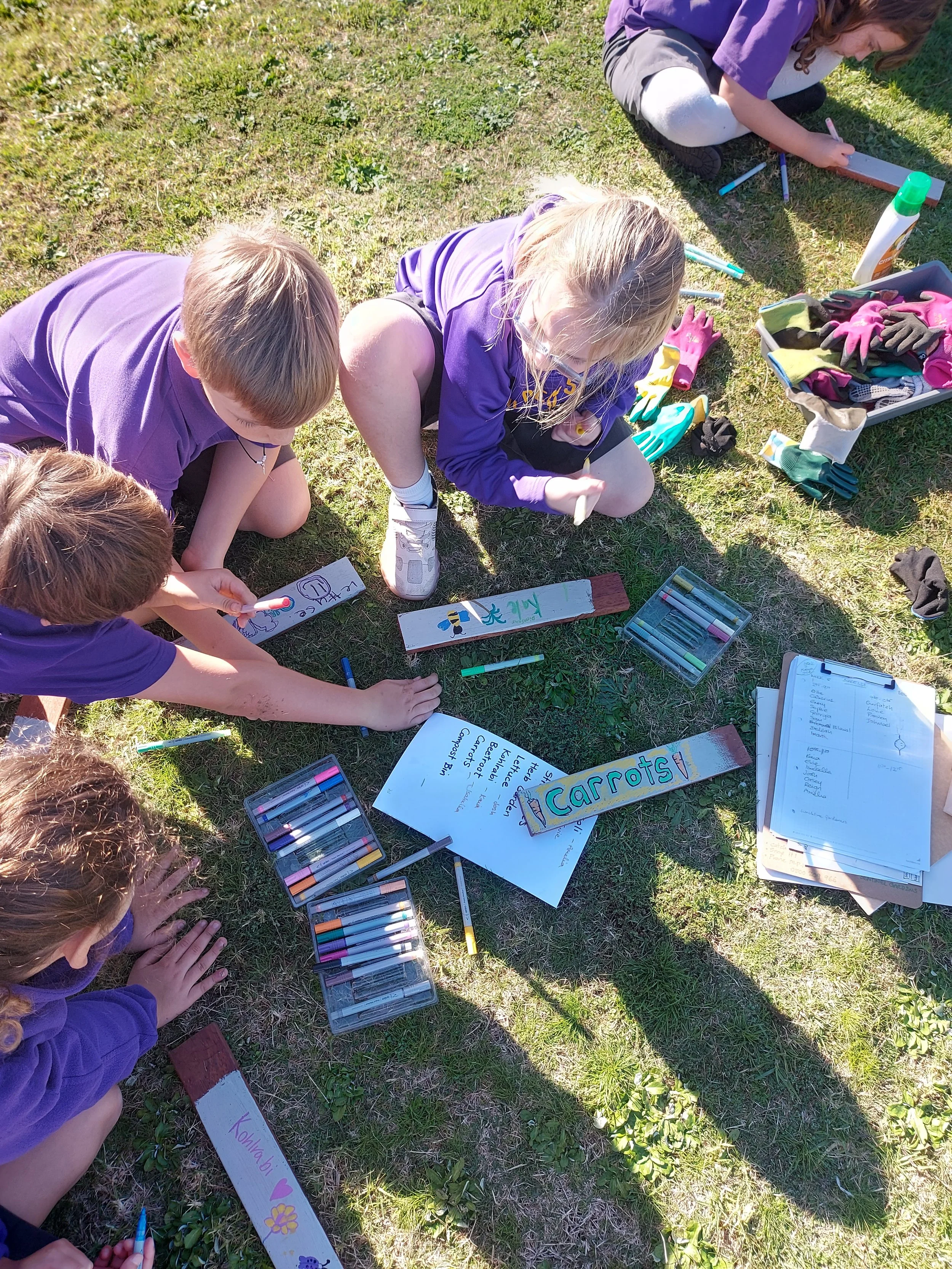
We also had some rainy day activities. The tamariki painted colourful garden markers, and I loved their creativity. Kids’ artwork is priceless! These markers will help us identify the vegetables in the school garden and they instantly add a splash of colour to a grey winter's garden.
To finish off Term 2, we participated in the New Zealand Garden Bird Survey. This activity involved counting and identifying birds around our school grounds. Equipped with binoculars and counting sheets, the tamariki worked together to spot various bird species. It was a peaceful end to our busy term, connecting us further with the natural world.
We are looking forward to watching our garden grow and flourish, and I can’t wait to continue our gardening adventures in Term 3 as we march towards spring!
Welcome to our Garden!
Welcome to Golden Sands School! I’m Nina from PiPS, and I’m excited to work with your school and establish a new school garden with you!
In Term One, I had the pleasure of working with the Year One classes. I am surprised by the curiosity and interest of the tamariki, and I’m pleased to feel that they have gotten to know me by the end of Term One.
Golden Sands School already has two worm farms, so we had a morning learning about the anatomy of worms, the difference between earthworms and tiger worms, and what they like to eat. We then took action by freshening up the two worm farms, feeding them food scraps and newspapers, and exploring how worm tea is beneficial in our school garden.
After the long school holidays, the existing school garden was a bit overgrown. We were lucky enough to have sunny weather each week and spent time outside exploring which insects we could see and find, as well as starting to weed the veggie patches. The tamariki sprinkled their first veggie seeds such as carrots, radishes, and calendula for the bees straight into the garden, and we started planting seeds for our winter crop into punnets, such as silverbeet, cabbage, and celery. I loved seeing how well they took care of these seedlings. These will be planted in Term Two into the new garden beds.
Another fun activity was making an insect hotel out of tin cans. We filled each can with different natural materials like rocks, sticks, straw, and pine cones where the insects can hide. We placed the “bug hotel” outside, and hopefully, lots of insects will start to move in!
We learned about herbs, their different aromatic smells, their uses in cooking and teas, and their medicinal properties. The kids’ favorite smells were lemon balm and mint! By creating a herb garden, we planted some new herbs such as rosemary, oregano, thyme, and lemon balm along with the existing garden.
Before Easter, the tamariki decorated white butterflies recycled from milk bottles. That was definitely a favourite fun activity for the kids. We put them on wooden sticks and placed them in the garden, they will hopefully scare away the real white butterflies from laying their eggs on our vegetable plants.
On our last day before the school holidays, the tamariki explored how to save seeds. I brought a sunflower head, some dried flowers, and some seed pods from kale and broccoli. We learned about the different sizes seeds have, how to find them, and the cycle of creating more plants from an existing plant. The tamariki were astonished to see that some seeds are so tiny yet can grow a whole new vegetable plant. They filled a little seed packet to take home. I loved hearing them say that they would give it to their parents as a present.
A fun ending was to have a closer look inside seasonal fruits by cutting them open and noticing their unique appearances inside, including where to find the seeds. We discussed how fruits like feijoa, pear, apple, and oranges will soon be planted in the school garden, and in the years to come, the Year One level will be able to harvest fruits from the trees. One boy commented, “Fruits and vegetables make you grow big and strong, and you will live a long life” – wise words from a six-year-old! The kids then drew colourful pictures of the fruits. Finally, the treat was to have a little taste of all the fruits.
Happy holidays, tamariki! I’m looking forward to seeing you all back in Term Two when we start building the new garden. Exciting times ahead!