In the garden at Arataki School- term 4
Our Arataki School gardens were full of life this term. We spent the early part of the term working on seed sowing, to grow a good supply of seedlings in our shadehouse. Without an irrigation system, we were relying on our young gardeners to take on the responsibility for watering the seedlings during the week. Although some weeks we had a few casualties, all in all, our gardeners did a great job of looking after their seedling babies.
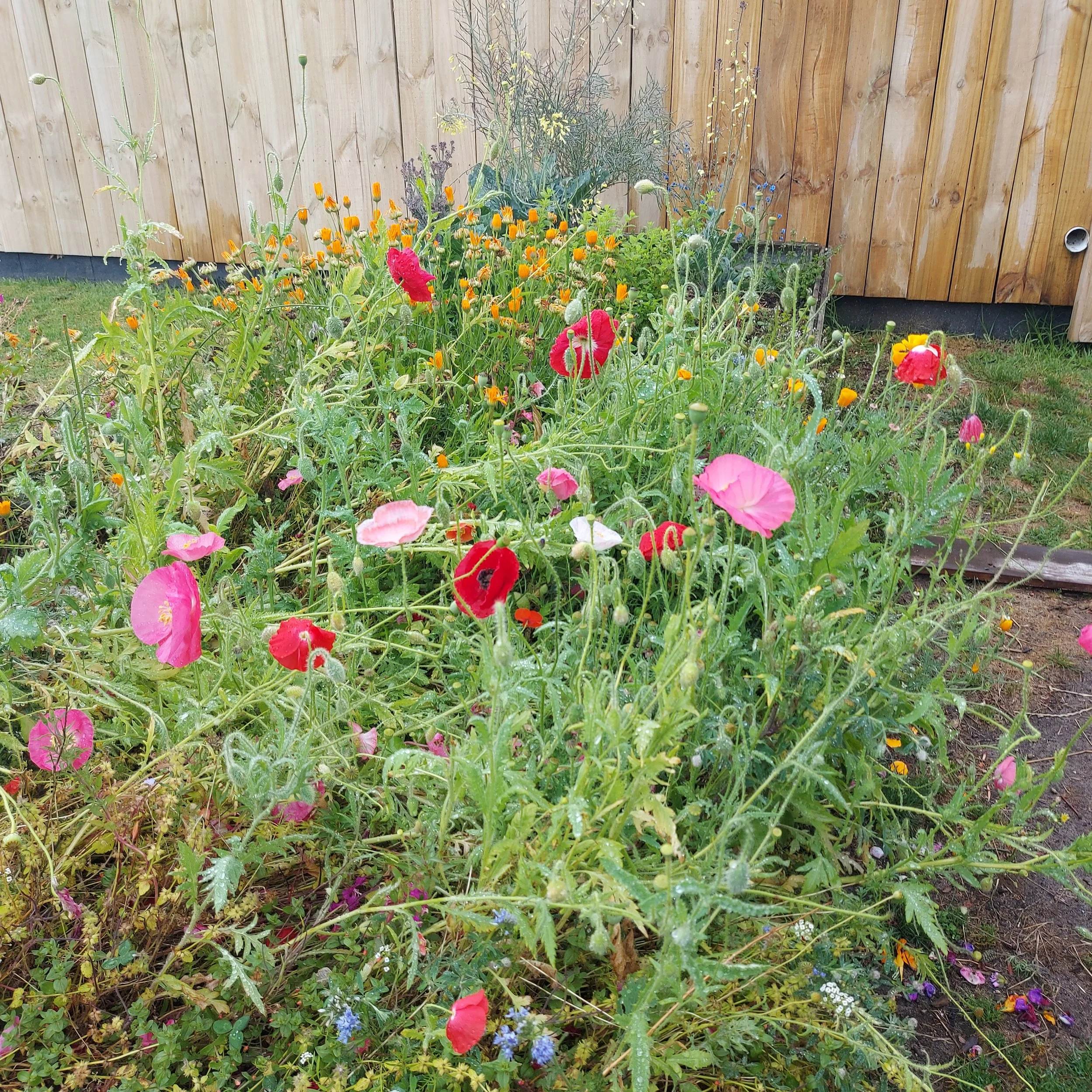
Our bumblebee wildflower gardens have really blossomed this term and the corner of the garden is a blaze of colourful chaos, with cornflowers, poppies, marigolds, snapdragons, calendula and borage attracting lots of pollinators. The buddelia is also in full flower, and is a hot favourite with the butterflies.
We spent a wet Tuesday in the hall, learning about the wonders of bumblebees and their value as pollinators in our gardens. We watched slides and short clips about them and learned that they even like to play football with beads, to keep themselves moving! We followed up the slideshow with a pollination activity; we made paper bee finger puppets, which flew to a dish of honey and from there to two other dishes of ‘pollen’, to see how their fluffy bodies transfer pollen from one flower to the next. We are looking forward to working with the NZ Bumblebee Conservation Trust to introduce a bumblebee hive to the gardens next year.
We spent a morning topping up the potato patch with rich organic compost from our compost bay, and although growth has been a little slow with the last few dry weeks, they are still coming along well.
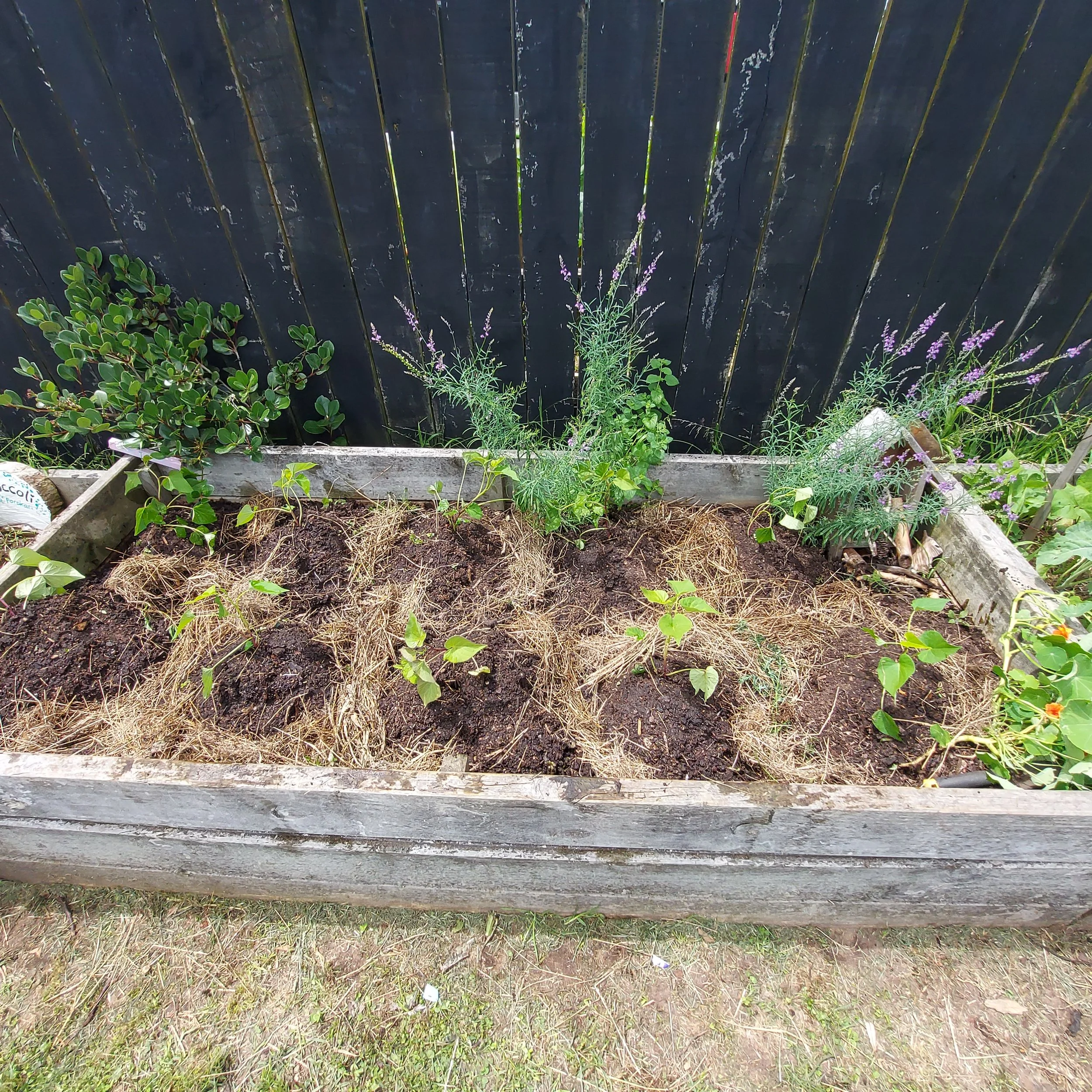
We have been working on crop rotation this term. Where the hungry broccoli and cauliflower were harvested, we planted our nitrogen-rich broad beans. When we picked the broad beans, we left their roots in the soil, digging up just a few of the plants to see the nitrogen nodules on their roots, before burying them in the garden beds again, to enrich the soil.
We learned about keeping the soil covered. We do this by chopping and dropping earlier crops, adding mulch, or planting low growing large leafed crops to act as a ground cover through which taller plants can grow. By planting butternut squash pumpkins in the same bed as our beans and popping corn, we have the perfect combo! The beans climb up the corn and provide nitrogen, while the squash keeps the ground covered, slowing weed growth and keeping moisture in.
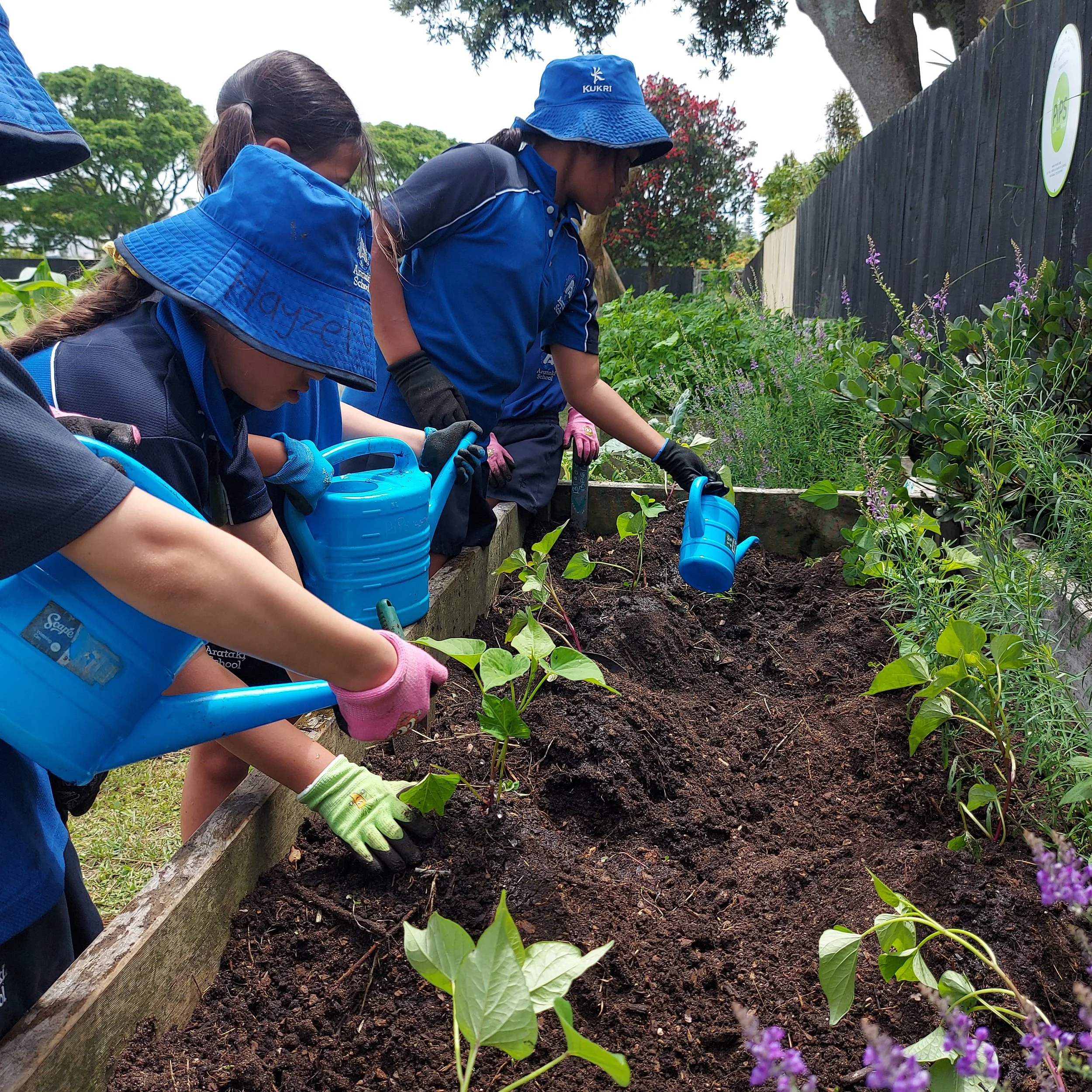
A wheelie bin of water, with a giant plastic flowerpot hanging in it as a seaweed ‘teabag’ has produced endless liquid fertiliser - a great resource. It’s amazing what nature gives us for nothing if we put in just a little time and effort! The plants grow so well and are much healthier and stronger when they get some good organic nourishment. The basic compost bays that we have put together from old (untreated) wooden pallets never cease to amaze us. Where the gardeners first held their noses and made disgusted noises, they now greet the compost with “oohs” and “aahs”, and hunt for the busy creatures who transform our green waste into black gold for our garden beds. They are learning about the cyclical nature of things and how, when we keep the balance right, nature can look after itself.
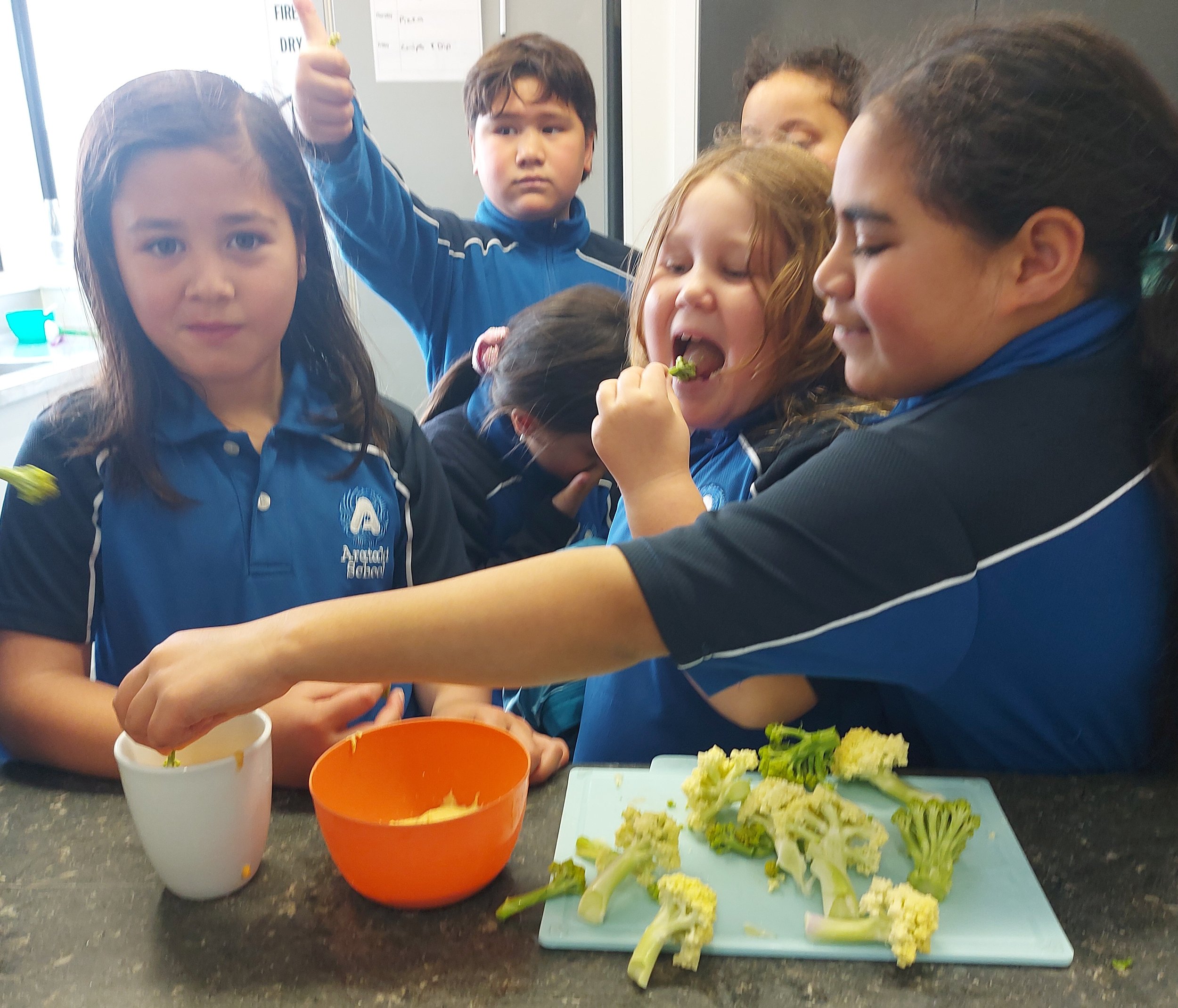
Throughout the term we have been harvesting. Starting out with broccoli and cauli, which we devoured with hummus that we made in the hall kitchen. We have a constant rich supply of NZ spinach, which the gardeners love to pick and take home in bags for the freezer, to add to their smoothies. We had leeks, carrots, beans and herbs too! The garden keeps on giving. We are looking forward to see what the fruit trees will provide early next year, after a heavy prune and some protection and mulching.

The gardeners who pop back into the school over the holidays might even find some juicy strawberries and raspberries in our sensory gardens - if they get there before the birds find them!